

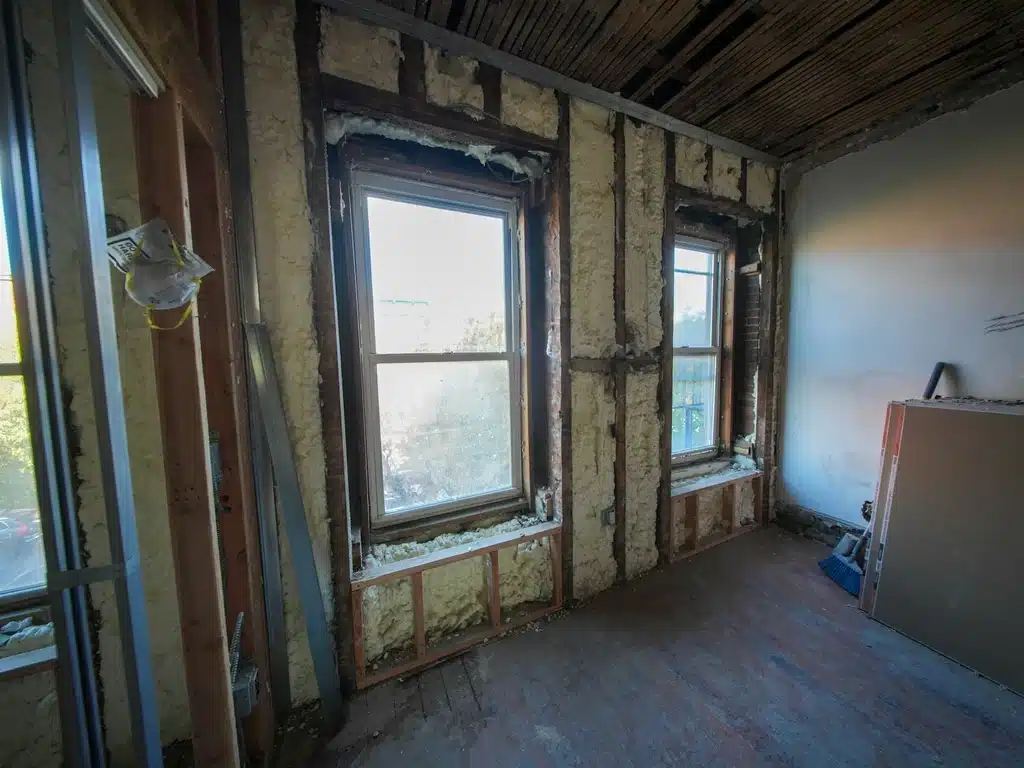
There is no single “best” insulation for every home. The right choice depends on where it’s installed, how much moisture is present, and what climate you live in.
An attic in a hot state needs something different than a damp basement in a cold region.
In this guide, you’ll find clear material comparisons, simple explanations, and practical recommendations for every part of your house.
How Home Insulation Works (R-Value, Air Leaks, and Heat Transfer)
Insulation slows down heat. In winter, it keeps warm air inside. In summer, it keeps heat outside. Heat moves through materials and through air.
Insulation slows heat flow, but air leaks let warm or cool air escape.
That is why sealing gaps around windows, doors, and attics is important. R-value tells you how well insulation resists heat.
A higher R-value means better resistance. Attic insulation matters most because heat rises. A poorly insulated attic can increase energy bills quickly.
Key takeaway: Insulation slows heat flow, but air sealing stops heat movement.
Quick Comparison of All Insulation Types
This table gives a fast overview of major insulation types. Use it to compare performance, cost, and best use areas.
Type | R-Value | Cost | Moisture Resistance | Lifespan | Best Use Location |
Fiberglass Batts | Medium | Low | Low | 20–30 yrs | Walls, floors |
Blown-In Fiberglass | Medium | Low–Medium | Low | 20–30 yrs | Attics |
Cellulose | Medium–High | Medium | Medium | 20–30 yrs | Walls, attics |
Spray Foam (Open) | Medium | High | Medium | 30+ yrs | Interior walls |
Spray Foam (Closed) | Very High | Very High | High | 30+ yrs | Exterior walls |
Rockwool | Medium | Medium | High | 30+ yrs | Basements |
Rigid Foam Board | High | Medium–High | High | 30+ yrs | Foundations |
Radiant Barrier | Reflective | Low–Medium | High | 20+ yrs | Attics (hot areas) |
Plasterboard | Medium | Medium | High | 20+ yrs | Garages, interiors |
SIP Panels | Very High | Very High | High | 50+ yrs | New construction |
Each material serves a different purpose depending on climate and location.
Note: Always match insulation type with moisture level and climate conditions
Fiberglass Insulation (Batts and Rolls)
Fiberglass batts and rolls are the most common and affordable insulation used in homes.
They are easy to install and fit between wall studs, floor joists, and ceiling frames.
This option works well for budget builds and simple upgrades.
However, it does not seal air leaks and can lose performance if compressed or exposed to moisture.
Fiberglass is best for open wall cavities and floors where installation is simple and the area stays dry.
Plasterboard Insulation Panels
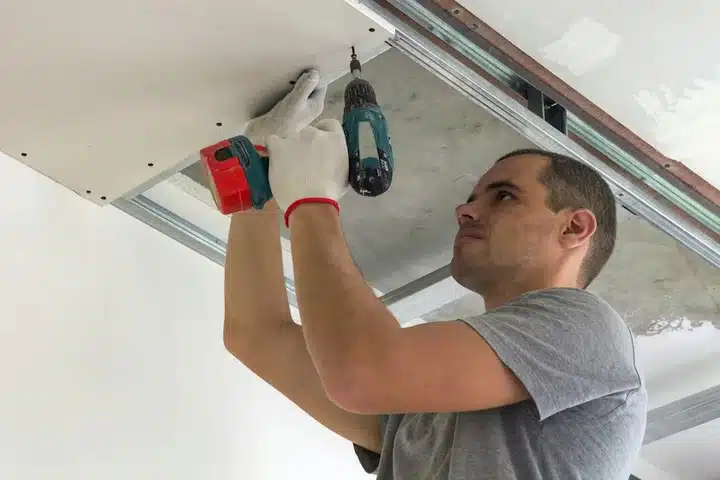
Plasterboard panels are rigid, plastic-based insulated boards designed for wall and ceiling assemblies in garages, workshops, basements, and commercial interiors.
They provide both insulation and a protective interior surface in one system.
These panels offer several advantages: a durable, moisture-resistant surface that’s easy to clean, consistent thermal resistance, and faster installation compared to traditional layered systems.
They’re ideal for interior walls, garages, basements, utility rooms, and workshops.
However, Plasterboard is not suitable for high-performance exterior thermal envelopes unless combined with additional insulation.
It functions best as an insulation and wall-lining solution rather than a replacement for attic insulation.
Blown-In Fiberglass Insulation
Blown-in fiberglass is loose insulation installed using a blowing machine.
It spreads evenly and fills gaps better than batts.
Best for:
- Attics
- Retrofit projects
- Hard-to-reach spaces
Because it settles into small gaps, it performs better in irregular attic areas.
However, it still needs proper air sealing for maximum performance.
Cellulose Insulation (Loose-Fill and Dense-Pack)
Cellulose is made from recycled paper treated for fire resistance.
It provides better cavity coverage than fiberglass batts.
Best for:
- Existing walls
- Older homes
- Attics
Dense-pack cellulose is tightly packed into wall cavities.
This reduces air movement and improves overall energy performance.
It is a strong option for upgrading insulation without major wall removal.
Spray Foam Insulation (Open-Cell vs Closed-Cell)
Spray foam expands after application, sealing cracks and gaps.
It provides insulation and air sealing in one step, but costs more than most other materials.
Open-Cell Spray Foam
Open-cell spray foam is softer and lighter than closed-cell. It provides good soundproofing and is often used in interior walls and ceilings.
It expands more during installation, helping fill small gaps. Its R-value is lower than closed-cell foam. It is less expensive but does not act as a strong moisture barrier.
Closed-Cell Spray Foam
Closed-cell spray foam is dense and rigid. It offers the highest R-value per inch among common insulation types.
It acts as a vapor barrier and adds structural strength to walls. It resists water and works well in exterior walls and basements. However, it is one of the most expensive insulation options available.
Rockwool / Mineral Wool Insulation
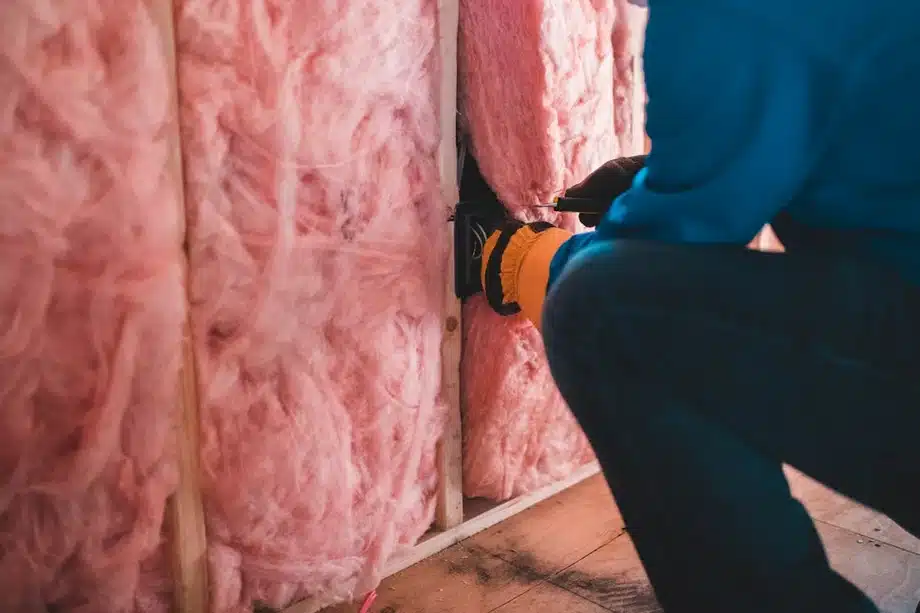
Rockwool, also known as mineral wool, is made from stone fibers and is highly durable, maintaining its shape over time.
It offers exceptional fire resistance, water resistance, and excellent sound insulation, making it ideal for environments where moisture and safety are priorities.
Rockwool performs particularly well in basements, moist areas, shared walls, and floors between levels.
Its unique properties make it a superior choice for applications requiring enhanced fire protection, moisture management, and acoustic control compared to traditional insulation materials.
Rigid Foam Board Insulation
Rigid foam boards include EPS, XPS, and Polyiso types.
They provide high insulation value in thin panels.
Best uses:
- Foundation walls
- Crawlspaces
- Exterior sheathing
Rigid foam resists moisture and helps prevent condensation better than fiberglass.
It is often paired with other insulation types for full wall systems.
Radiant Barrier Insulation
Radiant barriers reflect heat instead of slowing it.
They are usually installed in attics.
They work best in hot climates with strong sunlight.
Benefits:
- Reflects radiant heat
- Reduces attic temperature
- Helps lower cooling costs
Radiant barriers should be combined with traditional insulation for best results.
Best Insulation by Location in the House
Choosing insulation based on location makes decisions easier. Different parts of the house face different moisture and temperature conditions.
Location | Best Insulation Options |
Attic | Blown-in cellulose, blown-in fiberglass, radiant barrier (hot climates) |
Exterior Walls | Dense-pack cellulose, spray foam |
Basement & Crawlspace | Rigid foam board, rockwool |
Floors | Fiberglass batts, mineral wool |
Garage & Utility Areas | Plasterboard panels, rockwool |
Matching insulation to the right space improves comfort and energy savings.
Special Tip: Always seal air leaks before adding insulation for the best results.
Which Insulation Is Best? (Final Recommendations)
The best insulation depends on your goal and budget. If you want the lowest cost, fiberglass is a practical choice.
For the highest efficiency, closed-cell spray foam performs best.
Rigid foam works well where moisture protection is important. Cellulose is ideal for older homes, while rockwool is great for soundproofing.
In hot climates, combine attic insulation with a radiant barrier. For durable interior wall surfaces in garages or utility spaces, Plasterboard panels are a smart option.